Watercolor Highland Cow Clipart
If you have spent any time browsing design resources for branding, social media content, or packaging projects, you have likely stumbled across the charming world of watercolor Highland cow clipart. These hand-painted illustrations of Scotland’s iconic fluffy cattle have quietly become a staple across creative industries. And for good reason. There is something immediately disarming about a Highland cow rendered in soft watercolor washes—the shaggy fringe, the gentle eyes, the warm earthy tones. It strikes a balance between rustic authenticity and modern artistic sensibility. Whether you are designing wedding stationery, building a farm-to-table brand, or creating content for a cozy lifestyle blog, this clipart style offers a visual warmth that photography or crisp vector art sometimes cannot match.
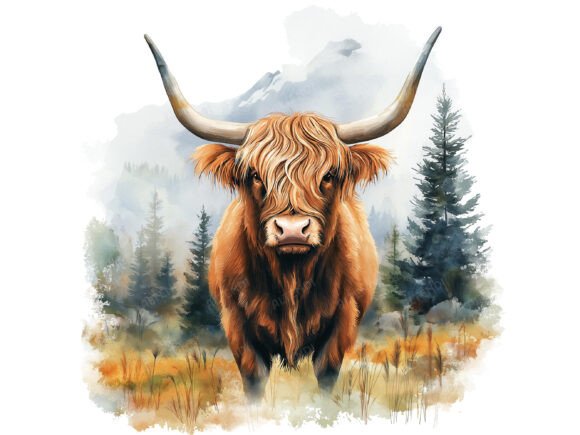
Watercolor Highland cow clipart refers to digital illustrations that mimic the look of traditional watercolor painting. Each piece typically features a single cow or a small composition, with soft edges, pigment granulation, and subtle color blending. The style leans heavily on texture—you can see the paper grain, the brush strokes, and the organic pooling of paint. This gives the clipart an analog, handcrafted feel that stands out in a digital world full of flat design and hyper-polished graphics. The cows themselves are usually depicted with oversized fluffy coats, long horns, and calm expressions, often set against muted botanical backgrounds or isolated on transparent layers for easy compositing.
The Visual Appeal of Hand-Painted Highland Cattle
What makes this clipart so effective is its emotional resonance. The watercolor technique softens everything. Harsh lines disappear, and what remains is a gentle, approachable image that feels personal rather than corporate. The color palette typically includes warm browns, ochres, soft greens, and dusty blues. These are not bright, saturated colors. They are grounded, earthy tones that evoke countryside pastures, wool blankets, and rainy afternoons by the fire. The personality of the Highland cow itself—calm, hardy, a little quirky—translates beautifully through watercolor. The texture of the paint mirrors the texture of the cow’s coat, creating a cohesive visual message.
For designers and brand strategists, this style offers a shortcut to authenticity. When you place a watercolor Highland cow on a product label or a website header, you communicate values like natural, handmade, slow-living, and approachable. It is a visual cue that says this brand cares about craft, not just commerce. And because watercolor clipart is already digitized, you get that handcrafted look without needing to commission an original painting or scan physical artwork. It is a creative font of a different kind—an asset that brings organic personality to any layout.
Where This Clipart Style Shines in Real Projects
Watercolor Highland cow clipart is not just for farm-themed projects. Its versatility often surprises new users. Here are a few places where it performs especially well:
- Branding and logo design. Small businesses in the food, beverage, and hospitality sectors use this clipart as a central brand mark. A watercolor cow logo instantly signals rustic charm. Coffee roasters, craft breweries, and artisan bakeries all benefit from this look. The clipart works as a standalone icon or paired with a clean serif font for a timeless feel.
- Packaging design. Product labels for organic butter, cheese, wool goods, or skincare featuring goat milk or lanolin often incorporate this imagery. The watercolor texture prints beautifully on matte paper and kraft labels. It lifts the perceived value without looking sterile or mass-produced.
- Wedding and event stationery. Rustic weddings, barn venues, and outdoor celebrations are a natural fit. Save-the-dates, invitations, and thank-you cards featuring Highland cows feel personal and whimsical. Pair the clipart with a handwritten font or a script font for an intimate, bespoke look.
- Social media graphics and web design. Instagram posts, Pinterest pins, and blog headers benefit from the high-contrast softness of watercolor clipart. It stops the scroll. On a website, used sparingly as a hero image or a background element, it adds texture without overwhelming the content. It works well as a display font replacement for hero sections—not as text, but as visual punctuation.
- Editorial design and publishing. Magazines, cookbooks, and lifestyle publications use watercolor Highland cow illustrations as chapter openers, sidebar art, or pull-quote decoration. The clipart breaks up text blocks and adds a touch of personality that photography cannot always deliver.
- Merchandise and print-on-demand. T-shirts, tote bags, mugs, and art prints featuring watercolor Highland cows sell consistently to animal lovers, Scotland enthusiasts, and fans of cottagecore aesthetics. The clipart translates well to screen printing and digital print methods.
How Watercolor Highland Cow Art Elevates Brand Identity
Beyond simple decoration, this clipart can influence how an audience perceives a brand. Visual hierarchy becomes more inviting when a soft watercolor illustration serves as the focal point. The eye is drawn to the texture and organic edges, which creates a natural entry point into the layout. This is especially useful in editorial design and web design, where you need to guide the viewer without relying solely on bold typography or heavy contrast.
Consistency across brand touchpoints also improves when you use a unified set of clipart assets. If your logo, packaging, website, and social media all feature the same watercolor Highland cow style, recognition builds faster. The hand-painted aesthetic becomes a signature. It signals that the brand pays attention to detail and values artistry. For brand identity work, this clipart can anchor the entire visual system. You can pull colors directly from the illustration—the warm brown of the coat, the soft green of the background—and use them as your brand palette. The result is a cohesive, professional look without needing a full custom illustration budget.
Audience engagement also sees a lift. People respond emotionally to animals, especially when rendered in a soft, comforting style. A watercolor cow feels less like a commercial asset and more like a piece of art. On social media, posts featuring this style often generate higher save and share rates. In social media graphics, the clipart creates a pause—a moment of warmth that invites a double-tap or a comment. For bloggers and content creators, it adds a layer of personality that helps a website feel like a destination rather than a brochure.
Choosing the Right Highland Cow Clipart for Your Work
Not all watercolor Highland cow clipart sets are created equal. When evaluating a collection, consider a few practical factors beyond just the visual style. First, look at the included poses and angles. A good set offers variety—profile views, front-facing cows, cows grazing, and cows looking directly at the viewer. This gives you flexibility across different layouts. You do not want every asset to feel like the same image rotated or flipped.
Second, review the resolution and file formats. For print design, you need at least 300 DPI files with transparent backgrounds. PNG files with alpha channels are standard. Some sets also include JPEG versions with white backgrounds, which are less useful for compositing. If you are working on large-format projects like posters or signage, check that the clipart can scale without losing quality. Watercolor textures can pixelate if the original scan was not high enough resolution.
Third, examine the color consistency across the set. The best collections maintain a cohesive palette so you can mix and match assets without jarring shifts in hue or saturation. This is critical for brand identity work where color accuracy matters. If the clipart includes isolated cows, separate botanical elements, and pre-composed scenes, you have more options for custom layouts. Some sets even include matching patterns, borders, and typography accents, which can save hours of layout time.
Fourth, consider commercial licensing. If you are a designer or entrepreneur creating products for sale, you need a license that covers commercial use. Most reputable clipart sellers offer standard and extended licenses. The standard license typically covers digital products, printed goods up to a certain volume, and marketing materials. An extended license may be required for merchandise resale, print-on-demand, or large-scale distribution. Always read the terms carefully. Using clipart without proper licensing can create legal and financial risk, especially as your business grows. If you work with a premium font or a commercial font, you know the drill—the same due diligence applies to design assets like clipart.
Practical Tips for Integrating Clipart Into Your Designs
Once you have selected your watercolor Highland cow clipart, the next step is making it work seamlessly in your projects. Start with font pairing. Because the clipart has a soft, organic texture, you want typography that complements rather than competes. A clean sans serif font with moderate weight works well for modern, minimal layouts. If you are going for a rustic or vintage feel, a serif font with warm brackets or a script font with natural flow can echo the hand-painted quality of the clipart. Avoid overly geometric or rigid typefaces, which can clash with the watercolor softness.
Pay attention to spacing. Watercolor clipart benefits from generous breathing room. Crowding the illustration with text or other elements diminishes its impact. Use white space strategically to let the pigment texture and color blending stand out. In logo design, consider placing the clipart above or beside the logotype with enough margin that the two elements feel balanced but not fused. In packaging design, let the clipart serve as the hero and keep supporting text subdued.
Think about color extraction. One of the most useful tricks is to sample colors directly from the clipart to build your layout palette. The watercolor process creates subtle variations and unexpected hues. Use those tones for background fills, accent borders, or typography color. This creates a visual echo that ties the whole composition together. It also makes the clipart feel intentional rather than slapped on.
Finally, experiment with layering. Watercolor images often look best when placed over light textures—linen paper, soft gradients, or muted photographs. Avoid placing them on busy patterns or clashing colors. A white or light cream background almost always works. If you need a dark background, use a drop shadow or a soft glow to separate the clipart from the background. The goal is to preserve the illusion of paint on paper.
Watercolor Highland cow clipart is more than a passing trend. It is a genuinely useful design asset that brings warmth, personality, and a handcrafted feel to a wide range of projects. Whether you are building a brand, creating content, or just making something beautiful for yourself, this style offers a versatile and engaging visual language. By choosing your sets carefully, pairing them with the right typography, and using them with intention, you can create designs that feel both professional and personal. That combination is hard to manufacture with stock photography or flat vectors. Sometimes the best way to connect with an audience is to show them something soft, something real, and something that looks like it was made by hand.