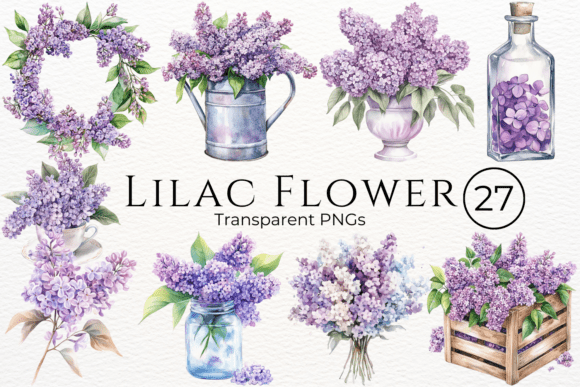
Lilac Flower Watercolor Cliparts: A Design Resource Worth Exploring
There is a distinct gap between a design that feels merely functional and one that truly connects. Often, the difference lies in the raw materials you choose to work with. Generic stock vectors and stiff photography have their place, but they rarely convey warmth or artistry. This is where a carefully crafted asset pack like Lilac Flower Watercolor Cliparts becomes invaluable. It offers a texture, tone, and organic authenticity that elevates projects from simple layouts into immersive visual experiences. For anyone building a brand, marketing a product, or creating content, understanding how to leverage this style of design asset is a practical skill that directly impacts professionalism and audience perception.
Embracing Imperfection: The Visual Personality of Watercolor Florals
The core appeal of watercolor cliparts lies in their inherently human quality. A digital vector is precise, but it can lack soul. A well-executed watercolor element captures the unpredictable nature of pigment on paper: the soft bleeding at the edges, the subtle variations in saturation, and the delicate gradients that occur naturally when paint meets water.
Lilac, in particular, presents a unique visual challenge. Its flowers grow in dense, overlapping panicles, creating a complex interplay of light and shadow. A good watercolor rendition captures this depth—from deep violet tones at the center to the palest blush at the tips. The accompanying foliage typically features soft, muted greens that don't compete with the blooms.
This combination creates a visual personality that is simultaneously elegant, approachable, and nostalgic. It speaks to themes of spring, renewal, grace, and natural beauty. It is a style that feels intentional and artistic rather than sterile, making it an excellent foundation for brands and content that aim to build an emotional connection with their audience.
Strategic Applications: Where These Assets Deliver the Most Value
Knowing where to deploy a specific design style is just as important as the style itself. The Lilac Flower Watercolor Cliparts set is not a one-size-fits-all solution, but for certain projects, it is an exceptionally powerful tool. Here are the primary areas where it can have the greatest impact:
- Brand Identity for Service-Based Businesses: Wedding planners, florists, boutique hotels, spas, and high-end skincare lines can use these cliparts to build a cohesive visual system. When a logo, business card, and website header all share the same hand-painted floral elements, the brand instantly communicates a premium, detail-oriented approach to its customers.
- Social Media and Content Marketing: Scrolling through a dense feed of photos, a soft watercolor background with an inspiring quote or announcement stands out. It breaks the visual monotony and provides a consistent thematic anchor for your grid. It is particularly effective on Pinterest, where textured, high-value visuals perform exceptionally well.
- Editorial and Publishing Layouts: Whether you are designing a blog post header, a magazine sidebar, or a book cover for a romance or lifestyle genre, these elements provide a soft focal point. They allow you to introduce visual interest without the harsh boundaries of a solid photograph, creating a more fluid and inviting reading experience.
- Packaging and Product Design: This is where high-resolution watercolors truly shine. A soap label, a candle jar, a product tag, or a greeting card benefits immensely from the tactile, handcrafted feel of watercolor. The texture translates beautifully to print, suggesting that the product inside is made with care and attention to detail.
- Event Stationery: Wedding invitations, save-the-dates, and bridal shower stationery are natural fits. The organic aesthetic of lilacs aligns perfectly with the romantic, personal nature of these events.
Building Visual Consistency and Brand Recognition
One of the most difficult challenges for any creative professional or small business owner is maintaining a consistent brand identity across multiple platforms. Using a disjointed collection of free resources leads to a fragmented look that confuses audiences and undermines professionalism.
A unified clipart set solves this problem immediately. By restricting your visual toolkit to a single, cohesive collection, every piece of content you produce shares the same artistic DNA. The colors are pre-matched. The line quality and texture are consistent. This allows you to establish a clear visual hierarchy: a large, detailed bloom becomes your primary focal point, while smaller buds and leaf sprigs serve as supporting accents or background textures.
This consistency is a direct shortcut to brand recognition. Your audience begins to identify your content by its distinct aesthetic before they even read a single word. It builds a sense of familiarity and trust. In marketing, where attention spans are measured in fractions of a second, that visual recognition is a powerful asset. It signals that you operate with a deliberate strategy, which in turn reinforces the perceived value of your products or services.
Practical Guidance for Selecting and Using Design Assets
Before integrating any design resource into your workflow, it pays to evaluate it critically. Not all clipart packs are created equal. Here is a practical framework for assessing a pack like Lilac Flower Watercolor Cliparts and using it effectively:
- Evaluate File Quality and Structure: Look for high-resolution files (300 DPI is essential for print). Insist on PNG files with transparent backgrounds. Seamless layering is impossible without them. A premium set should offer individual elements (single stems, leaves) as well as composed arrangements (wreaths, bouquets) to give you maximum flexibility.
- Test for Cohesion: All elements in the set should look like they belong together. The lighting, saturation, and texture should be uniform. If you have to spend hours color-correcting or filtering the assets to make them match, the pack is not well-designed.
- Understand the Licensing (EULA): This is the most crucial step. A legitimate commercial use license typically allows you to use the cliparts in products you sell (such as printed merchandise, ebooks, and branding for clients). However, it usually does not allow you to resell the raw digital files themselves. If you are designing for Print-on-Demand (POD) platforms like Redbubble, Amazon KDP, or Printful, verify that the specific license covers those use cases. Protecting yourself from licensing issues upfront saves significant legal and financial headaches later.
- Plan Your Compositions: Watercolor elements look best when they are allowed to breathe. Use them as focal points rather than covering every square inch of the canvas. Layer them over soft textured backgrounds, or combine them with a clean sans serif font for a modern look, or a classic serif for a more traditional feel. The contrast between the soft, organic art and crisp typography is often what makes a design feel genuinely premium.
Making Intentional Design Choices
The tools you choose directly shape the story you tell. Lilac Flower Watercolor Cliparts provides a specific aesthetic rooted in natural elegance and handmade authenticity. It is not a generic solution for every project, but when the goal is to create a brand or piece of content that feels warm, professional, and artistic, it is a resource that delivers real, tangible value. By focusing on consistency, respecting licensing, and composing with intention, you transform a simple digital file into a cornerstone of your creative identity.